
The Best Japanese Restaurants in the World (Six We've Eaten At, None of Them in Japan)
The Best Japanese Restaurants in the World (Six We've Eaten At, None of Them in Japan)
Japanese cooking has travelled further than almost any other kind, and the versions that stuck with us weren’t the pure ones. They were the ones that landed somewhere else and picked something up on the way — a Peruvian red pepper, a sheet of Spanish pork fat, an old Swedish theatre that used to host punk shows.
Peru is the clearest case. Thousands of Japanese migrants came to work the sugarcane fields around the start of the 20th century and stayed — one of them, Alberto Fujimori, became president in the 1990s. When the farm work dried up, many opened restaurants and cooked the local food their own way. They became known as the Nikkei, and the word ended up meaning the food itself.
Here are the six we’d send you to: one in Lima, two in Vancouver, two in Singapore, one in Stockholm. Most are collisions. One is the exact opposite. And three of the six are close to invisible from the street.


Maido, Lima: Japanese technique, Peruvian ingredients, fifteen courses
Maido is Micha Tsumura’s restaurant — he’s Japanese-Peruvian, and grew up in Lima — and as of 2026 it sits at number one on San Pellegrino’s World’s 50 Best Restaurants list. That’s why a lot of people will find this page; it isn’t why we still talk about the meal. From the street it’s a plain boxy building with a small logo on the door, easy to walk past. The name means welcome in Japanese and the staff chant it at you on the way in. Over the dining room hangs a rope sculpture, parts of it painted red, that reads as the Japanese flag or the Peruvian one depending where you sit.
We ate the fifteen-course Nikkei Experience. The standout was a dim sum stuffed with squid and sea snail on potato puree, the dough made with squid ink.
“This was one of the best dishes I have ever had, and the dough — made with squid ink — was especially impressive.
There was also a squid choripan plated like a miniature hot dog, and sea urchin rice with avocado and nut powder. Sake, beer and chicha — a Peruvian fermented drink made from maize — all came before we reached wine at the fourth course, and the waiters cleared plates like ninjas between them. Tsumura came out himself to tell us where else in Lima to eat ceviche, raw fish cured in citrus.
The catch is getting in. Reservations were tough when we went and will only be tougher now; we got a mid-week lunch, which is the sensible thing to aim for.


Ancora, Vancouver: the same idea on a different coastline
Ancora Waterfront Dining runs the same Japanese-Peruvian collision as Maido, on the Pacific coast of Canada, with two head chefs — one for each half. Ricardo Valverde, the executive chef, is Peruvian; Yoshihiro Tabo runs the raw section as the sushi expert.
“Both Peru and Japan have a history of fish-based dishes, and when you factor in the abundance of fresh seafood available in British Columbia you have everything you need to create great fusion cuisine.
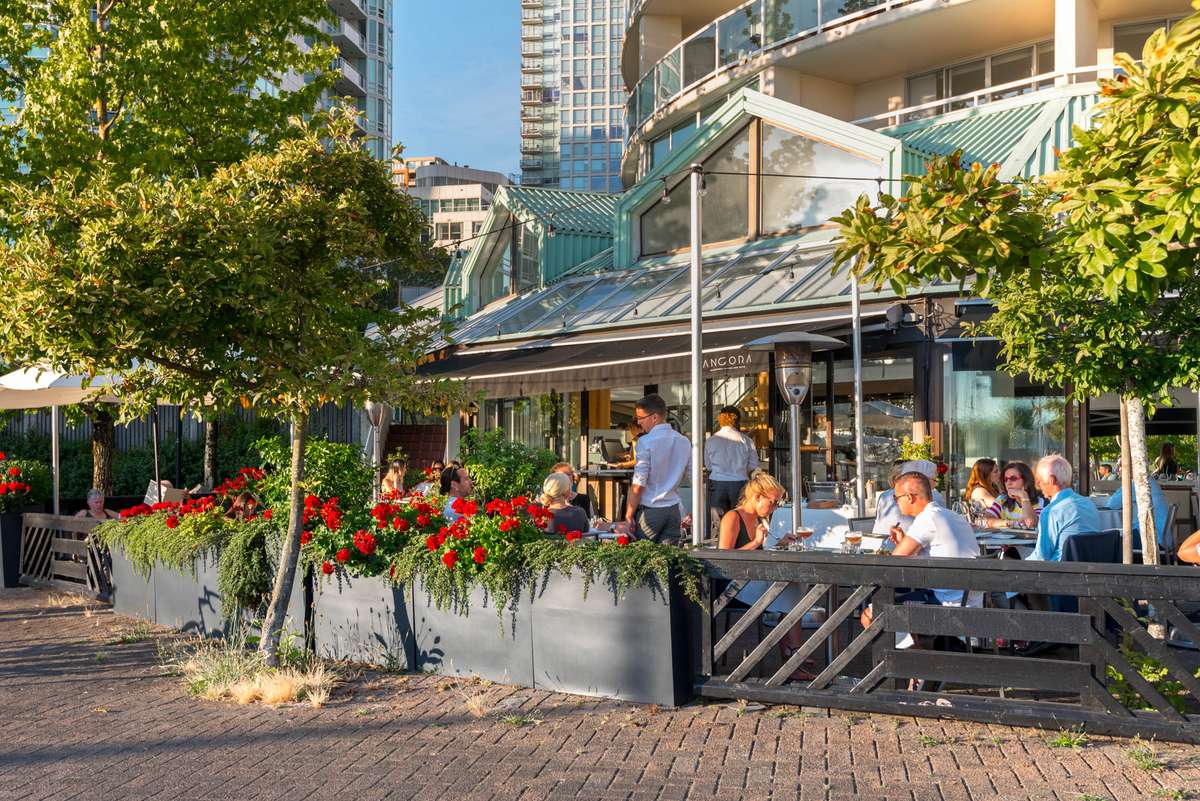
It’s the brightest room on this page — glass, skylights, white marble — and we ate on the terrace watching boats in the marina across the walkway. Start with the Ancora Glacier: a bed of ice loaded with ceviche, oysters, mussels, crab, prawns, sashimi and escabeche. The one I’d go back for is the lobster risotto, cooked with aji panca, a red pepper you rarely find outside Peru, which makes it smoky and sweet at once. Philip, the bar manager, is Russian and grew up in his family’s Uzbek restaurant, which shows on a cocktail list that also runs to pisco sours and Japanese whiskies. There’s a pet crane named after him.
Our own review of Ancora has no complaint in it, so here’s the honest version of who it suits: people who like to experiment. You leave having eaten a combination you’ve never had. If what you want is a straight sushi meal with nothing borrowed, that’s the next restaurant on this list.


Masayoshi, Vancouver: the one that borrows nothing
Masayoshi is the counter-argument to this whole page. Vancouver is full of Japanese restaurants, from izakayas — Japanese pubs that take their food seriously — through to sushi bars, and the buzz around the city calls this 24-seat room the best sushi in it; it has picked up a Michelin star since we ate there. Nothing has been adapted for anybody: no chicken teriyaki, no Westernised options, just nigiri, sashimi and a few standard Japanese dishes.
We’d never done an omakase before — the word means “I’ll leave it up to you,” from the Japanese for “to entrust,” so you order nothing and the chef decides. It runs about an hour at the counter and we barely spoke, because watching Masayoshi Baba work is the point; he cleans after every single cut. He’s one of a small number of chefs licensed to serve fugu, the poisonous puffer fish, though there was none on our menu. Ours came to about twelve bites of nigiri — red eye snapper, albacore tuna, smoked fish, blue fin tuna — plus the two signatures: salmon smoked under a dome at your table, and dashi, the basic Japanese stock, boiled in front of you in a reverse-osmosis siphon and served as clear soup.
The catch is planning: the room is small, the omakase is bar seating only, and it needs three days’ notice. Book it when you book the trip, not when you land.


Iggy’s, Singapore: Japanese cooking with a Spanish accent
Iggy’s belongs to Ignatius Chan — Iggy — a sommelier who went into the restaurant business in 1994 and opened this one in 2004 inside the Regents Hotel, moving it to the Hilton when it outgrew the space. It runs independently of the hotel and feels more like a speakeasy than a hotel dining room: small and plain apart from one big internal window onto the kitchen. Most nights Iggy works the floor himself, telling people what to drink.
The influences we could taste were Japanese and Spanish, and the abalone proves it — chanterelles and morels underneath, a veil of Ibérico pork fat draped over the top that melts as it sits, thyme dust over all of it. The other was a course called the vegetable garden: fifteen different vegetables in an Ibérico dashi broth, Spanish ham smoke sitting inside a Japanese stock. Dessert included a cookie that tastes like gado gado, the Balinese salad, thanks to the kaffir lime in it.
The meal ran somewhere between nine and thirteen courses; we lost count, because snacks kept arriving between them. The one thing that didn’t land was the opener, Sakura Ebi — bright pink shrimp on a translucent cracker, stood upright in a bowl of pebbles. It looked spectacular, and how it looked is what we remember about it, not how it tasted.


Bincho, Singapore: the whole chicken, over the grill
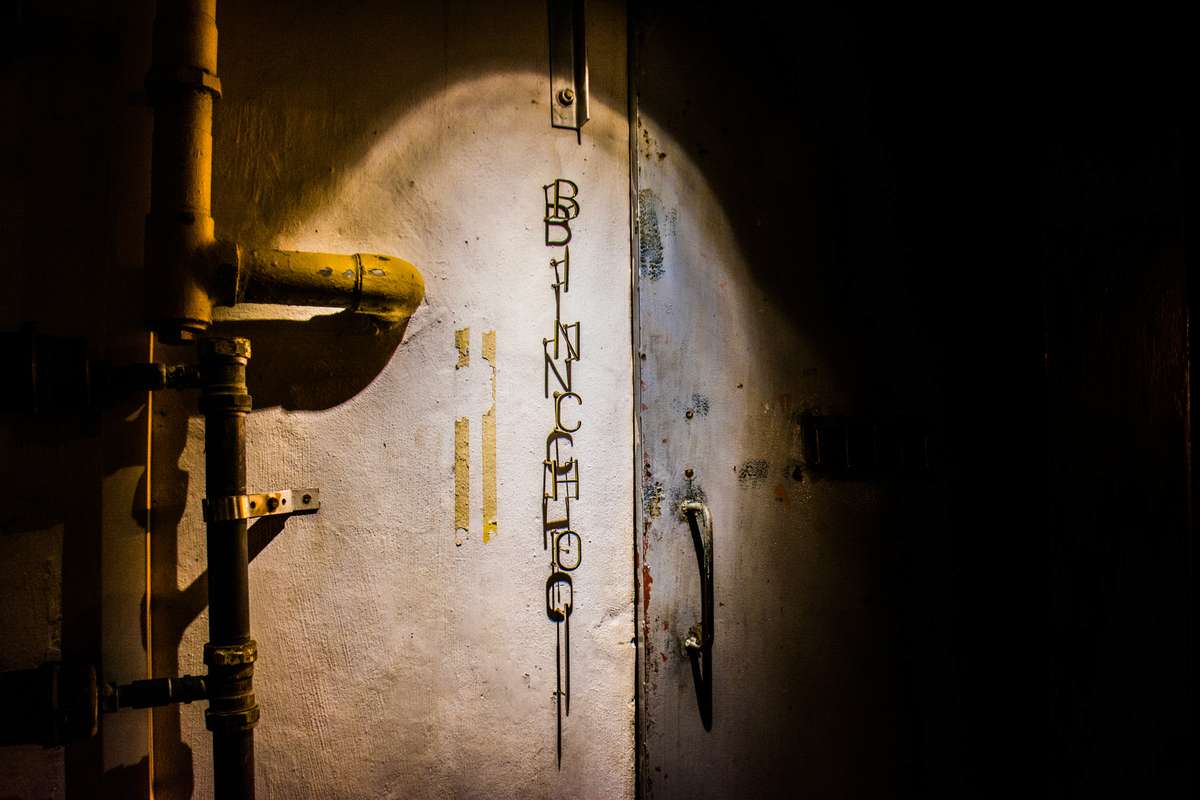
Bincho is the one we’d never have found on our own. We got there through the Unlisted Collection, a Singapore boutique hotel company that also builds restaurants; their marketer Denise offered to take us out, gave us an address — 78 Moh Guan Terrace, unit 01-19 — and asked one question: are you willing to eat anything? It turns out to be an apartment block, and we circled it several times before spotting a very small vertical sign next to a weathered facade and a row of dumpsters. Behind that questionable door is a sharp modern room that feels more like a bunker than a restaurant. Same address and the same grill today, but the Unlisted Collection has handed it on and the Yujin Izakaya team runs it now.
Bincho is built on the yakitori-ya, Japan’s small traditional grilling stalls, where yakitori — little pieces of meat and vegetables cooked over fire — is the whole menu. Chef Asai Masashi works right in front of you. The salty plates, Yakitori Shio, came first: gizzards, breast, tail, cartilage. Then the sauced ones, Yakitori Tare: heart, liver, neck meat, cock’s comb. Our favourite came after all that — mentai wings stuffed with cod roe, the smoke off the grill against the salt of the roe. Then Japanese sea bream, and grilled lamb neck with teriyaki, garlic and black pepper sauces.
It’s genuinely hard to find and the seating is limited, so book rather than turn up. And you have to want the whole bird — the point of the place is the parts you normally skip, so if gizzards and cock’s comb are a hard no, this isn’t your night out.



Shibumi, Stockholm: the izakaya that closed and came back
Shibumi took us ten minutes to find while standing more or less on top of it: the sign outside was about six inches long and the door was small. What was behind it is a chic spin on an izakaya — small dishes, shared, arriving in waves — run as a proper restaurant.
The chef is Sayan Isaksson. When we ate there he ran four restaurants, three of them literally upstairs, in a run-down old theatre that had been part of Stockholm’s punk scene. Worth being precise about the credential — Isaksson’s Michelin star was for Esperanto, his most famous restaurant, upstairs, not for Shibumi. He was born in Thailand and adopted by a Swedish couple as a baby, and that double inheritance is the likeliest reason he keeps reaching back to Asia.
We over-ordered on purpose. The eggplant in dashi with black sesame comes cold, the sesame strong without taking over. The corn tempura is the one to get if you only get one thing: crunchy, salty and slightly sweet in the same bite. The okonomiyaki, a savoury pancake loaded with toppings, tasted like the ones we’ve eaten in Japan. The main event is a single enormous lamb rib — one rib — in a sweet and savoury glaze, served alone on a rectangle of black slate.
One thing to know before you look for that door: the theatre is gone. Isaksson’s group went under in 2018 and took Esperanto, Imouto and Shibumi with it. Shibumi reopened in September 2025 at a different address in Stockholm, same chef and same name, under new owners who describe it as a completely new form. Everything above is the first one — treat it as the reason to look the new one up, not a description of it.
It was as much a drinking place as an eating one — the craft cocktails mostly came with a snack of their own — so expect a long loose evening of shared plates rather than a menu you can time.


So which one do you actually book?
If you plan trips around meals it’s Maido, and aim for a mid-week lunch. Ancora for the same idea in daylight with boats outside. Masayoshi if you want Japanese cooking held completely straight, booked three days ahead. Iggy’s if you care about wine. Bincho if you’ll genuinely eat anything. Shibumi if you want a whole evening rather than a meal — bearing in mind it is a new room now, not the one we sat in.
One last thing, obvious only once all six were written up: Maido, Masayoshi and Bincho are all close to invisible from the street — a small logo, a busy road out of the centre, a row of dumpsters. Three of the best Japanese meals we’ve had outside Japan were behind doors we nearly walked past.


Find a hotel in any of these
We may earn a commission if you book through these links.